
Las Vegas Grass Ban Lawsuit: What Homeowners Need to Know About Trees and Property Values
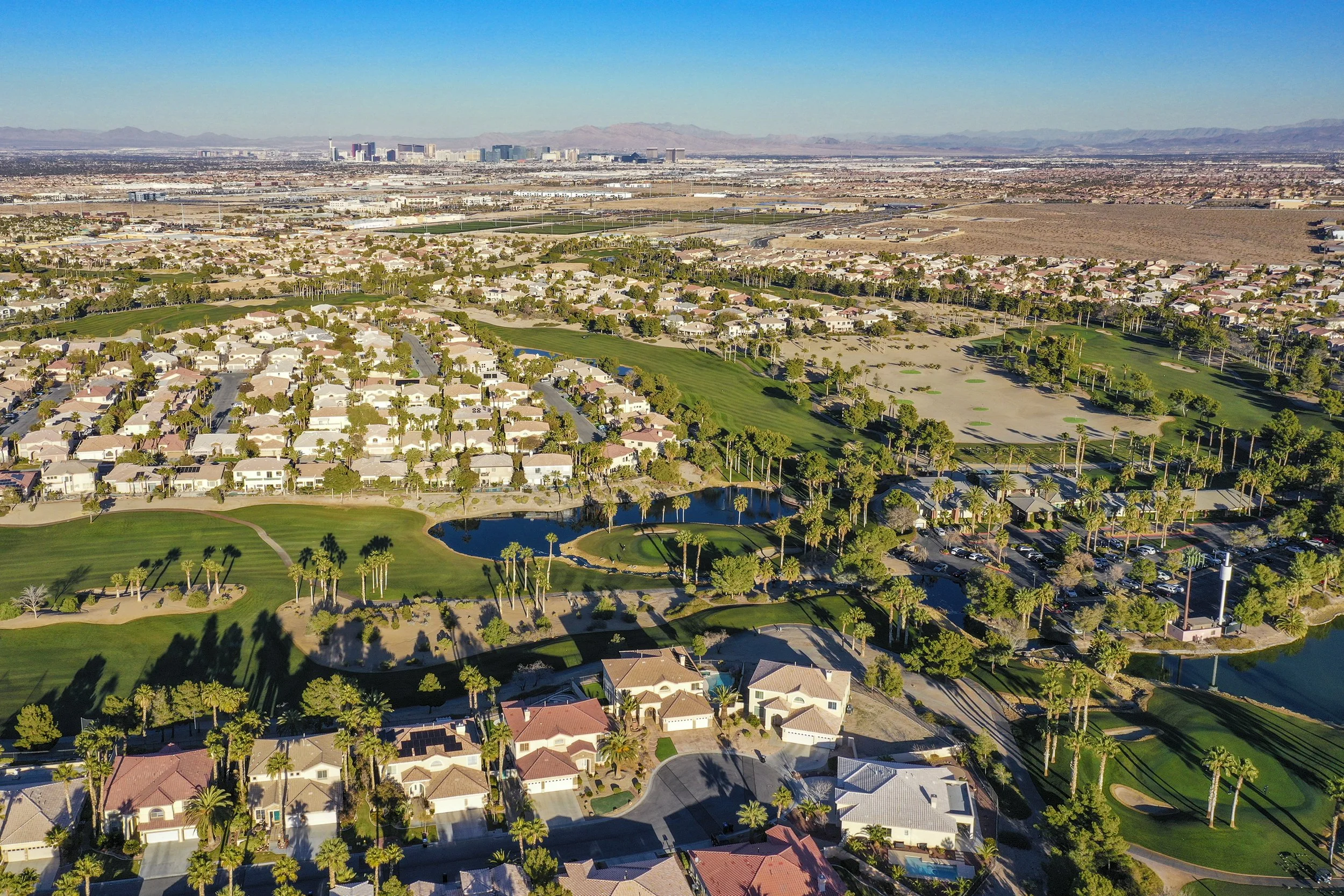
A bombshell lawsuit filed this week could have major implications for Las Vegas homeowners, particularly those in established neighborhoods like Summerlin, Henderson, and other master-planned communities where mature trees define the character and value of the area.
The lawsuit, filed Monday in Clark County District Court, claims that Nevada's 2021 "useless grass" ban has caused the death of an estimated 100,000 mature trees throughout the Las Vegas Valley—translating to roughly $300 million in tree damage. If you're a homeowner or prospective buyer in Las Vegas, here's why this matters to you.
What's the Grass Ban About?
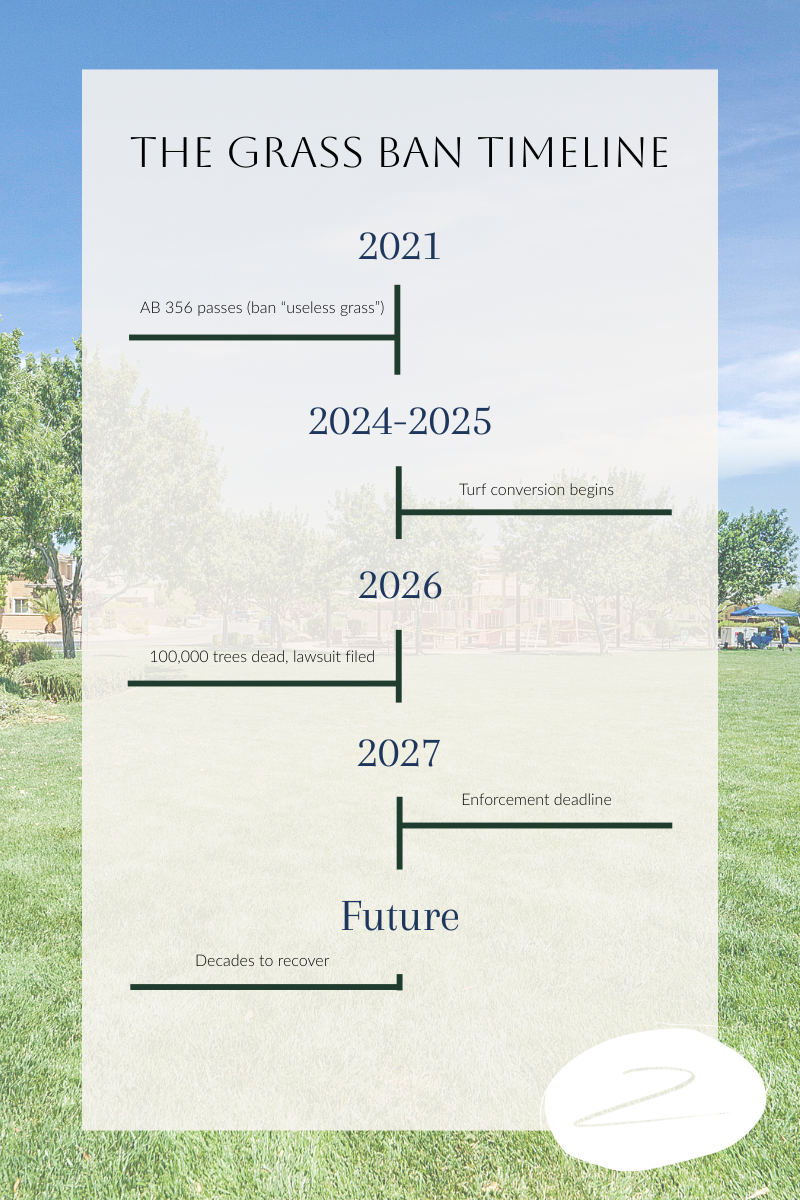
Back in 2021, Nevada lawmakers passed Assembly Bill 356, mandating the removal of "nonfunctional turf"—essentially grass that doesn't serve a functional purpose—to conserve Colorado River water. Starting in 2027, it will be illegal to irrigate certain grass areas with water from the Colorado River, our valley's main water source.
The Southern Nevada Water Authority was tasked with defining what constitutes "useless" grass, and they determined it includes grass within 10 feet of a street, grass in center medians, and other areas deemed non-functional.
The intent was noble: with Lake Mead facing historic lows and seven states wrestling with how to survive with less Colorado River water, conservation has become critical. Las Vegas has long been a leader in water conservation, but lawmakers felt we needed to do more.
Where Did Things Go Wrong?
Here's where the good intentions may have created unintended consequences.
According to the lawsuit filed by four plaintiffs—including residents from Summerlin's Canyon Fairways and Henderson's Green Valley—the requirement to remove grass has led to the death of thousands of mature trees that relied on that grass irrigation system.
"We have a beautiful neighborhood that people always say they bought into because of it being green," said Kim Snyder, a Summerlin resident who's lived in Canyon Fairways for 25 years. "We want to keep it that way, and we have a right to keep it that way."
Mark Edington, a Henderson cosmetic dentist who calls himself the "Henderson tree hugger," is concerned about trees dying at a nearby park and along streetscapes after homeowners associations tore out the grass beneath them.
Local horticulturist Norm Schilling, owner of Mojave Bloom Nursery and a 35-year expert in Southern Nevada landscaping, provided expert testimony estimating that less than 10 percent of trees survive grass conversion when not properly managed. His declaration notes that "it will take decades for the Las Vegas Valley to recover, if it can at all."
Why This Matters for Property Values
If you own a home in Las Vegas—or you're thinking about buying one—the tree canopy in your neighborhood isn't just about aesthetics. It directly impacts your quality of life and your property value.
Temperature Control: Mature trees provide critical shade in our desert climate. While the science isn't always consistent on exact temperature reductions, researchers generally agree that trees are the single most important and attainable heat-adaptation measure to prevent heat-related deaths in the Desert Southwest. Las Vegas regularly exceeds 110 degrees in summer, and tree shade can make the difference between a pleasant neighborhood walk and a dangerous one.
Property Values: Established neighborhoods with mature trees consistently command higher prices than those without. Buyers pay a premium for green, shaded streets—particularly in master-planned communities like Summerlin, Southern Highlands, and Green Valley where the landscape was part of the original appeal.
Curb Appeal: Drive through any mature Las Vegas neighborhood and you'll notice the stark difference between streets lined with 30-40 year old trees versus newer developments with saplings. That mature canopy took decades to establish and significantly enhances curb appeal.
Replacement Cost: The lawsuit estimates $300 million in tree damage. Consider what it would cost to replace a mature 40-foot ash or elm tree in your front yard—if you could even find one. Young replacement trees won't provide the same shade, cooling, or aesthetic value for 20-30 years.
The Water Authority's Response
The Southern Nevada Water Authority declined to comment on the pending lawsuit, but in previous statements about dying trees, spokesman Bronson Mack has suggested that many tree deaths result from mismanagement—homeowners assuming they shouldn't water trees as much after turf conversions.
This raises an important point: trees that previously relied on grass irrigation systems need continued watering even after grass removal. The transition needs careful planning and execution.
The water authority hasn't publicly detailed how it plans to enforce the 2027 deadline, though recent board meetings indicate they're focused on outreach and education rather than aggressive enforcement.
What Neighborhoods Are Most Affected?
Based on the lawsuit and media coverage, the communities seeing the most impact include:
Summerlin: Established neighborhoods like Canyon Fairways feature decades-old trees in streetscape landscaping. The lawsuit specifically mentions concerns about removing grass under mature tree canopies.
Henderson/Green Valley: Both the lawsuit plaintiffs and the "Henderson tree hugger" Instagram account document tree deaths in older Henderson subdivisions where HOAs have completed turf conversions.
Older Master-Planned Communities: Any community developed in the 1990s-2000s likely has mature landscaping that includes both grass and trees in proximity. These areas face the most complex conversion challenges.
Parks and Common Areas: The lawsuit challenges the water authority's interpretation of what constitutes "nonfunctional" grass, arguing that park grass and community green spaces were never intended to be included in the ban.
The Real Estate Implications
If you're currently a Las Vegas homeowner:
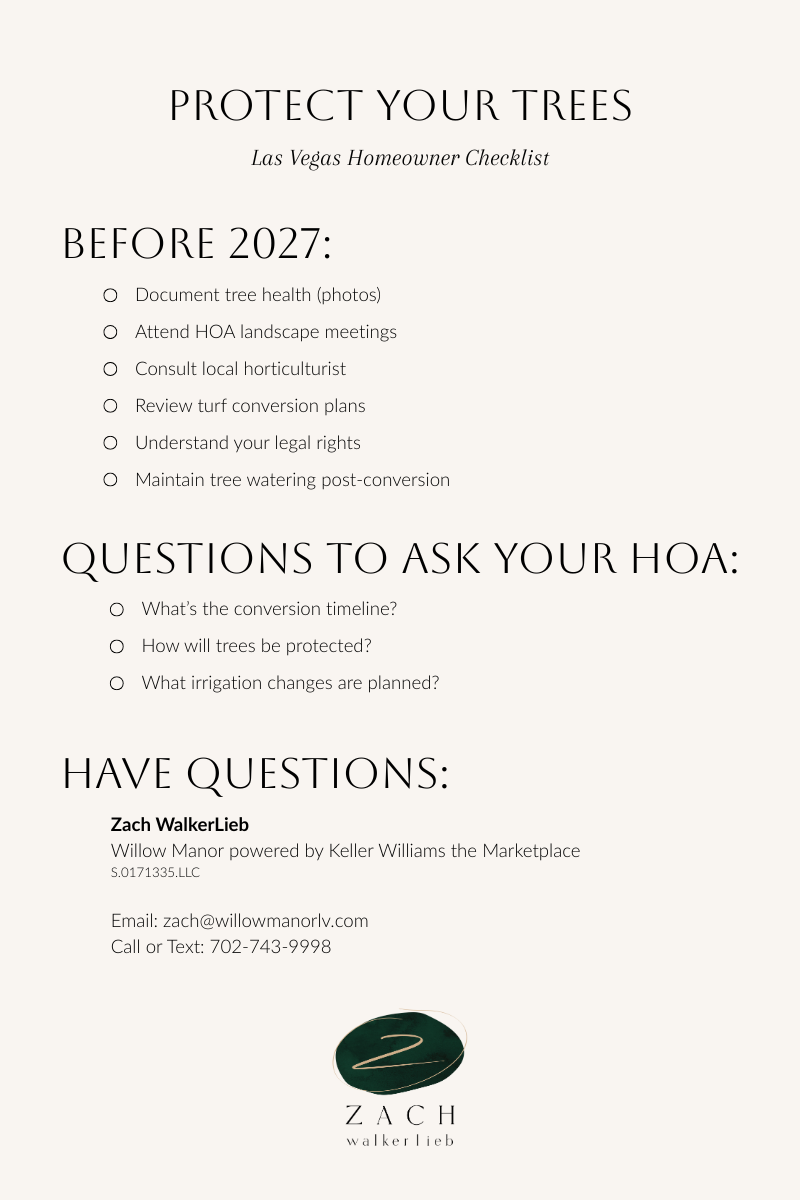
Know Your Rights: The lawsuit argues that the water authority exceeded its authority in defining nonfunctional turf and that property owners should have more say in how the law is interpreted and enforced.
Document Your Trees: If you have mature trees that rely on grass irrigation, document their current health with photos and consider consulting with a local horticulturist about proper transition strategies.
HOA Considerations: If you live in a community with an HOA that's planning turf conversions, get involved in the planning process. Push for tree preservation strategies rather than wholesale grass removal.
Property Disclosures: If you're selling, be transparent about any recent turf conversions and tree health. Buyers are increasingly savvy about these issues.
If you're buying in Las Vegas:
Evaluate Tree Health: When touring properties, look at tree condition in common areas and streetscapes. Are trees thriving or showing signs of stress? Has recent turf conversion occurred?
Ask About Landscaping Plans: If the neighborhood still has turf under trees, ask the HOA about their plans for compliance with the 2027 deadline. How will they protect trees during conversion?
Consider Newer vs. Established: There's now a trade-off between buying in established neighborhoods with mature (but potentially at-risk) trees versus newer communities with desert landscaping and young trees that were planted with current water restrictions in mind.
Premium for Green: If mature trees and green landscapes matter to you, expect to pay a premium in neighborhoods that have successfully maintained them.
The Bigger Picture: Water vs. Livability
This lawsuit touches on a fundamental tension in Las Vegas living: balancing critical water conservation with quality of life.
Nobody disputes that Southern Nevada faces serious water challenges. Lake Mead projections continue to worsen, and the Colorado River crisis isn't going away. We need to conserve.
But the lawsuit plaintiffs argue there should be smarter ways to achieve conservation goals without destroying the mature tree canopy that makes neighborhoods livable, property values sustainable, and our city less of a concrete heat island.
"There have to be alternative ways to conserve water if we really are in jeopardy," Snyder said. "Why are we paying the price to conserve when we are the most conservation-oriented city in the world?"
She has a point. Las Vegas has led the nation in water conservation for years, recycling nearly all indoor water use and implementing aggressive rebate programs for turf removal. The question the lawsuit raises is whether we've now pushed conservation so far that we're damaging the very assets that make our city attractive to residents and new arrivals.
What Happens Next?
The lawsuit is just beginning its journey through Clark County District Court. The water authority will file its response, and the case could take months or years to resolve.
In the meantime, the 2027 deadline looms. Homeowners associations and property owners need to start planning for compliance—but this lawsuit might give them legal cover to push back on overly aggressive interpretations of what constitutes "non-functional" grass.
The Southern Nevada Water Authority recently announced a deal to invest up to $500,000 in tree planting in heat islands throughout the valley—perhaps an acknowledgment that losing tree canopy has real consequences the community won't accept.
The Takeaway for Homeowners and Buyers
Whether you own in an established Las Vegas neighborhood or you're shopping for a home, pay attention to this issue:
Tree canopy affects property values, neighborhood character, and livability
The grass ban deadline is approaching, but implementation remains uncertain
This lawsuit could change how the law is enforced
Smart turf conversion can preserve trees, but it requires planning and proper maintenance
Neighborhoods that successfully maintain mature trees will likely command premium pricing
Las Vegas is evolving from a grass-and-trees desert oasis model to something more sustainable. How we navigate that transition—and whether we can preserve the best of our established neighborhoods while still conserving precious water—will shape our city's future and your property's value.
About the Author
Zach WalkerLieb is a top Las Vegas real estate agent and Managing Partner of Willow Manor, one of the city’s leading luxury real estate teams. With hundreds of millions in closed sales, Zach brings a deep, practical understanding of the Las Vegas housing market, from high-end luxury to everyday residential realities. Beyond real estate, he serves as Chairman of the Board for Habitat for Humanity and as a board member of Keystone Corporation, giving him firsthand insight into housing policy, affordability, and long-term community development. Known for clear thinking, market truth, and local expertise, Zach writes to help buyers, sellers, and investors make confident, well-informed decisions in Las Vegas real estate.

Have questions about how these landscaping and water conservation issues might affect specific Las Vegas neighborhoods? Curious about property values in areas that have already undergone turf conversion versus those that haven't? Reach out—understanding these local dynamics is crucial for both buyers and sellers in today's Las Vegas market.