
Why January Could Save Las Vegas Buyers Thousands (And What December Taught Us)
If you've been sitting on the fence about buying a home in Las Vegas, January might just be your moment. According to a new national study, buyers who purchase in January save an average of $23,000 compared to those who wait until the peak spring market—and Las Vegas is proving to be no exception.

The National Case for January Buying
LendingTree's analysis of 2024 home prices found that May was the priciest month for homebuyers nationwide, with a median of $194.20 per square foot. January, on the other hand, came in 8% lower at $178.60 per square foot. That's a significant difference that translates to real savings.
"January is often considered one of the best times to buy because the market is quieter and buyers typically have more leverage," says Neil Brooks, president of NewDay Home. "Many people pause their search during the holidays and wait for the spring rush, so buyers are often competing against fewer offers."
The reasons are straightforward: fewer buyers actively looking means less competition, more motivated sellers, and greater negotiating power on everything from purchase price to closing costs.
What December Revealed About the Las Vegas Market
Here's where it gets really interesting for us in the valley. December 2025 delivered some eye-opening data that sets the stage for January opportunities.
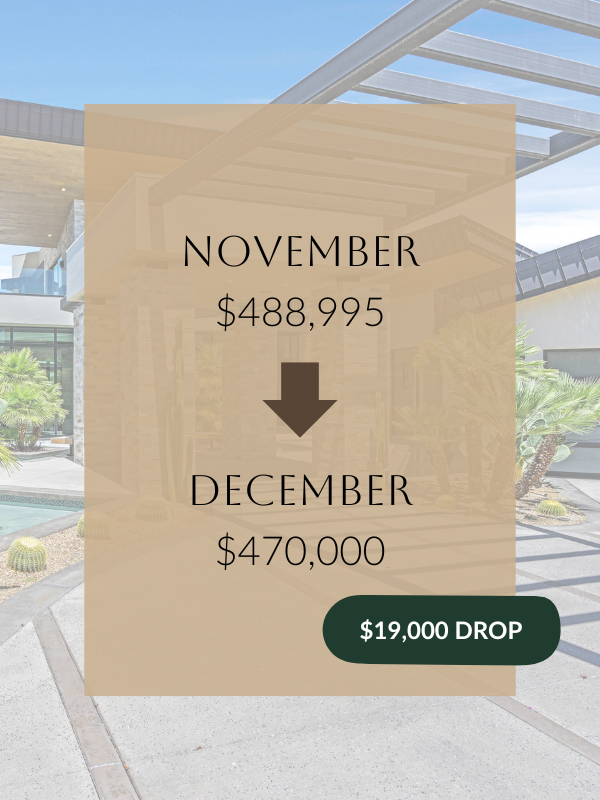
After Las Vegas median home prices hit an all-time high of $488,995 in November, December saw a sharp correction—prices dropped to $470,000, a decrease of nearly $19,000 in just one month. For context, that's almost the entire savings that the national study attributes to buying in January versus May.
What caused such a dramatic shift? The same seasonal dynamics that make winter months advantageous for buyers nationwide kicked in here too: decreased buyer activity during the holidays, more motivated sellers looking to close before year-end, and a natural market recalibration after an unexpectedly strong November.
Las Vegas Seasonal Patterns: The Winter Advantage
Local real estate experts have long recognized that October through February represents prime buying season in Las Vegas for those seeking deals. Here's why:
Less Competition - While spring and early summer see peak activity with families timing moves around the school year, winter months experience significantly fewer active buyers. In January 2025, only 47% of single-family homes sold within 30 days, compared to more aggressive spring/summer markets where homes routinely go under contract in days.
Motivated Sellers - Sellers still on the market in December and January are typically more motivated. Whether they're facing relocation deadlines, financial pressures, or simply want a fresh start in the new year, these sellers are often more willing to negotiate on price, cover closing costs, or offer repair credits.
Inventory Advantages - While Las Vegas inventory does dip slightly during the holiday season (typical for any market), it rebounds in January as new listings hit the market. In January 2025, there were 3.3 months of inventory available—still favoring sellers technically, but providing buyers with more choices than the tight markets of previous years.
Price Resets - As December 2025 demonstrated, the Las Vegas market tends to reset pricing during winter months. That $19,000 drop from November to December isn't a crash—it's a recalibration that creates opportunity.
The Spring Rush Is Real in Las Vegas
Once March hits, everything changes. Spring inventory typically increases 15% or more compared to winter, but so does buyer competition. The data shows a clear pattern:
March-May: Peak listing season, highest competition, strongest pricing
June-August: Activity sustained but extreme heat can slow showings
September-November: Modest pickup but tapering before Thanksgiving
December-February: Slowest period, best negotiating leverage for buyers
I can attest, that some of my clients who have paid the best prices for their homes have purchased in the months of December, January, and February. There’s usually less competition and this can be very advantageous to buyers.

Mortgage Rates Add to the Opportunity
With mortgage rates hovering just above 6%—the lowest we've seen in three years—January 2026 combines favorable financing with seasonal buying advantages. This creates a rare window where both borrowing costs and purchase prices work in buyers' favor.
On a $470,000 home (December's median), a 6.16% rate versus last year's 6.93% saves you approximately $275 per month, or nearly $100,000 over the life of a 30-year mortgage.
What Las Vegas Buyers Should Know Right Now
If you're thinking about buying in January, here's the current landscape:
Inventory is balanced - We have about 3.3 months of supply, which means you have choices without the extreme competition of a seller's market, but inventory isn't sitting stagnant either.
Prices are off peak - December's $470,000 median is significantly lower than November's record high. If this follows typical seasonal patterns, January prices should remain competitive before spring appreciation kicks in.
Sellers are negotiating - With 45.4% of December closings taking longer than 30 days, sellers are more open to price adjustments, closing cost assistance, and other concessions.
Builder incentives are aggressive - Homebuilders trying to hit year-end sales goals are offering substantial incentives, including rate buydowns and closing cost assistance.
The Flip Side: Why Some Wait for Spring
To be fair, there are reasons some buyers prefer spring shopping:
More Inventory - Spring typically brings 10-15% more listings, giving buyers additional options. If you're particular about finding exactly the right home in exactly the right neighborhood, you might value the selection over the price advantage.
Weather - Las Vegas doesn't have the winter weather challenges of other markets, but spring does offer ideal showing conditions with pleasant temperatures and blooming landscapes.
Relocation Timing - Families with school-age children often prefer summer moves to avoid disrupting the school year.
What About Selling in January?
If you're on the selling side, January can be advantageous too, but for different reasons. You face less competition from other sellers, and the buyers actively looking in January are typically serious and motivated. They're not just window shopping—they have reasons (job relocation, lease ending, etc.) pushing them to buy now.
However, you need to price competitively from day one. The December data shows that overpricing in a winter market leads to extended days on market and eventual price reductions anyway.
The Bottom Line for Las Vegas
My opinion is the January and February are great times to buy. The market dynamics are in your favor. Over my career, I have seen buyers get some of the best deals in January and February. National data shows January buyers save an average of $23,000 compared to peak season, and Las Vegas is demonstrating its own version of this seasonal advantage. December's nearly $19,000 price drop from November, combined with increased inventory, motivated sellers, and historically low mortgage rates, creates a compelling case for January action.
Whether you're a first-time buyer, a move-up buyer, or an investor, understanding these seasonal patterns gives you strategic advantage. The question isn't whether you can save money by buying in January—the data clearly shows you can. The question is whether the timing works for your specific situation.
As we saw with December's price correction, the Las Vegas market follows seasonal rhythms that create real opportunities for informed buyers. If you're ready to buy and you've got your financing in order, January could be your month.
About the Author
Zach WalkerLieb is a top Las Vegas real estate agent and Managing Partner of Willow Manor, one of the city’s leading luxury real estate teams. With hundreds of millions in closed sales, Zach brings a deep, practical understanding of the Las Vegas housing market, from high-end luxury to everyday residential realities. Beyond real estate, he serves as Chairman of the Board for Habitat for Humanity and as a board member of Keystone Corporation, giving him firsthand insight into housing policy, affordability, and long-term community development. Known for clear thinking, market truth, and local expertise, Zach writes to help buyers, sellers, and investors make confident, well-informed decisions in Las Vegas real estate.

Thinking about making a move in January? Want to know how current pricing and inventory look in your target neighborhoods? Reach out—I can provide you with up-to-the-minute data on Las Vegas market conditions and help you understand if January timing makes sense for your situation.