
Las Vegas Bucks National Home Equity Trends: What This Means for Local Homeowners
If you've been following national real estate headlines, you might be getting a little nervous. Stories about declining home values, shrinking equity, and underwater mortgages are making their rounds again. But here's what those national reports aren't telling you: Las Vegas is telling a completely different story.
The National Picture Looks Shaky
Let's start with what's happening across the country. According to the Federal Reserve's latest Z.1 Financial Accounts, the aggregate market value of all U.S. homes dropped by $361 billion in the third quarter of 2025, falling to just over $48 trillion. While that's still elevated compared to 2024, it marks a concerning trend.
Home equity as a percentage of household real estate fell to 71.6% nationally, down from 72% in the second quarter. Meanwhile, ATTOM's Home Equity & Underwater Report shows that equity-rich homes—properties where owners owe no more than half the property value—declined to 46.1%, down from 47.4% the previous quarter and 48.3% a year earlier.
Perhaps most concerning? The share of seriously underwater homes (where owners owe at least 25% more than their property is worth) ticked up to 2.8%, rising in 46 states despite record-high national home prices.
States like Florida, Arizona, Colorado, and Georgia saw some of the largest drops in equity-rich homes, with Florida plummeting from 52.5% to 46% in just one year.
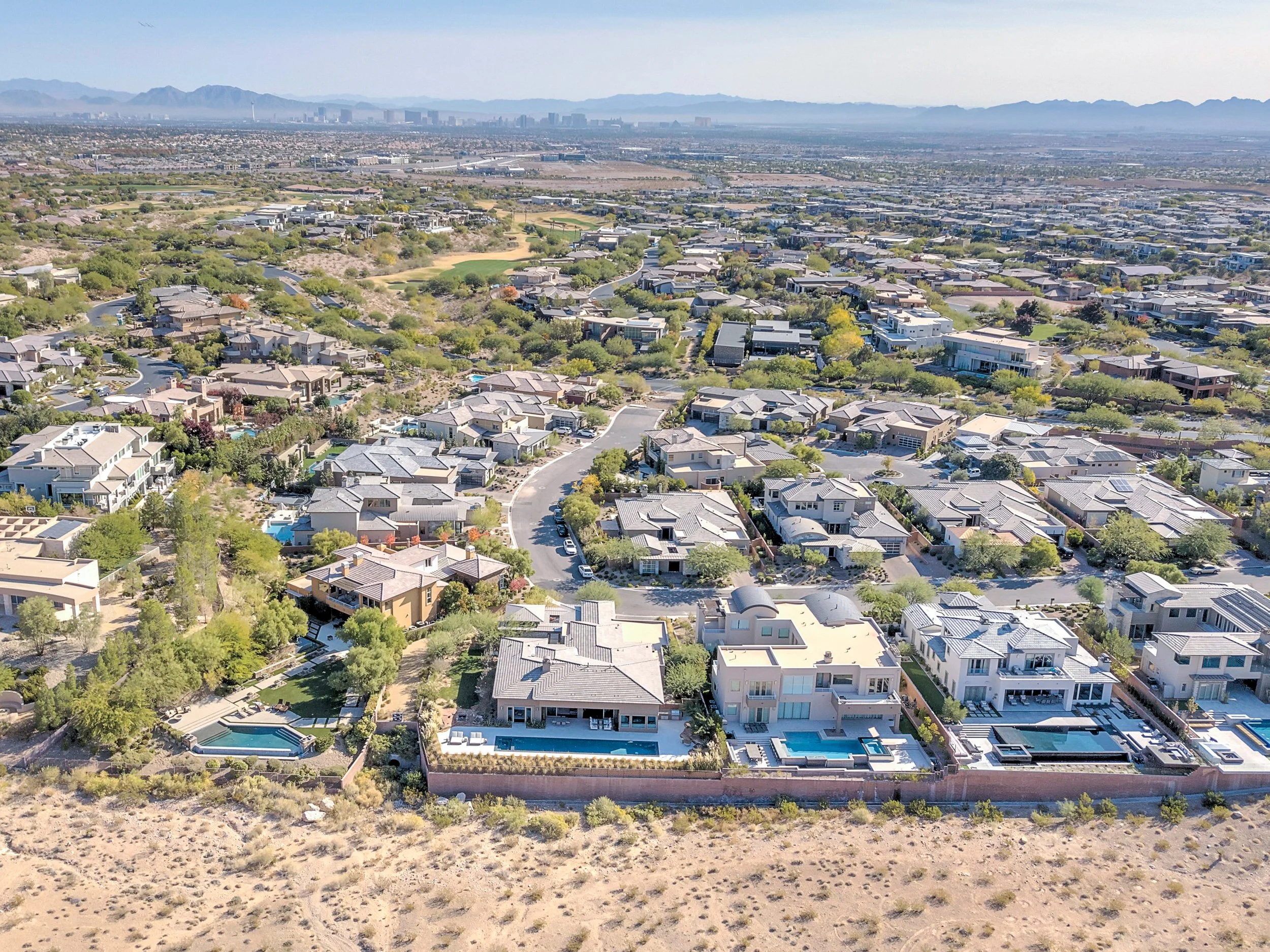
Las Vegas: A Different Story Entirely
Now here's where it gets interesting for us here in the valley.
Las Vegas homeowners are sitting on strong equity positions. According to multiple local market reports, equity remains robust in Southern Nevada, with distressed sales hovering near just 0.5%—a fraction of what we saw during the Great Recession.
While Notices of Default have increased about 28% year-over-year (from historically low levels, mind you), they remain far below the 2008 peaks, and many NODs never actually become foreclosures. The reason? Homeowners here have substantial equity cushions and low locked-in mortgage rates averaging around 4% for existing mortgages.
Las Vegas median home prices have held remarkably steady. As of late 2025, single-family homes are hovering around $470,000-$480,000, down only about 2% from peak levels—not the dramatic declines we're seeing in other Sun Belt markets that boomed during the pandemic.
Why Is Las Vegas Different?
Several factors are protecting Las Vegas homeowners from the national equity squeeze:
1. Strong In-Place Mortgage Rates Most Vegas homeowners who purchased or refinanced between 2020-2022 locked in rates around 3-4%. With current rates hovering above 6%, there's little incentive for these owners to sell, which means they're holding onto their equity rather than being forced out.
2. Sustainable Price Growth Unlike markets that saw 30-40% appreciation during the pandemic boom, Las Vegas experienced more moderate gains. This means we're not experiencing the same sharp corrections seen in places like Phoenix or Austin.
3. Economic Diversification Las Vegas isn't just about tourism anymore. With major projects like the Sony movie studio (expected to create 16,000 jobs), the Brightline West rail project ($2.5 billion in bonds approved), and the A's new ballpark opening in 2028, our economic base is broadening. This creates sustainable demand for housing beyond the boom-bust tourism cycle.
4. No State Income Tax Advantage Nevada's zero state income tax continues to attract relocating buyers, particularly high-income earners from California and other high-tax states. This steady in-migration supports home values even when other markets soften.
5. Limited Distressed Inventory With distressed sales accounting for only 0.5% of closings, there's no flood of foreclosures dragging down neighborhood values like we saw in 2008-2012. Homeowners with equity simply aren't forced to sell at fire-sale prices.
What About the Slight Price Dip?
Yes, Las Vegas prices have softened slightly—median single-family prices are down about 2% from their 2024 peaks. But let's put this in perspective.
National home prices have gone negative year-over-year in several markets for the first time since 2023. Meanwhile, Las Vegas is experiencing what's best described as a "normalization" rather than a crash. Inventory has increased about 31% year-over-year, giving buyers more choices, and homes are taking about 55-64 days to sell instead of being snatched up instantly.
This isn't a crisis—it's a market returning to balance after years of extreme seller advantage.
The Investor Factor
Here's another interesting Vegas-specific trend: investor purchases of Las Vegas homes dropped 20% year-over-year in Q3 2025—the largest decline of any major metro area in the country, according to Redfin.
While some might see this as negative, it's actually creating opportunities for traditional homebuyers who were previously being outbid by cash investors. With investors pulling back, individual buyers have less competition and more negotiating power.
What This Means for Las Vegas Homeowners
If you're a current homeowner in Las Vegas, here's the bottom line:
You're likely in a stronger equity position than most Americans. While national equity is eroding and underwater homes are rising in most states, Las Vegas remains insulated by strong fundamentals.
Don't panic over small price fluctuations. A 2% dip from peak pricing is not the same as the 27% crash we saw from 2006-2012. If you're not planning to sell immediately, these minor adjustments are just market noise.
Your locked-in low rate is valuable. If you have a 3-4% mortgage, you're essentially sitting on a financial asset. That low payment combined with solid equity gives you flexibility and security.
Refinancing opportunities are limited but strategic. Unless rates drop significantly below your current rate, refinancing probably doesn't make sense. However, if you locked in at 7% or higher in 2023-2024, recent rate drops to around 6.16% could save you meaningful money.
What This Means for Buyers
If you're looking to buy in Las Vegas right now, you're entering a market that's distinctly different from the rest of the country:
You have more negotiating power. With inventory up 31% and days on market increasing, sellers are more willing to negotiate on price and closing costs. Some builders are offering significant incentives to close year-end deals.
You're buying in a stable, not crashing, market. Unlike markets experiencing significant price corrections, Las Vegas prices are holding relatively firm, meaning you're less likely to experience immediate depreciation after purchase.
Less competition from investors. With investor purchases down 20%, you're facing fewer all-cash offers and waived contingencies.
The Bottom Line
While national headlines paint a gloomy picture of declining home equity and rising underwater mortgages, Las Vegas homeowners should feel confident that we're in a fundamentally different position.
Our market's combination of strong existing equity, low locked-in mortgage rates, economic diversification, and limited distressed inventory creates a resilience that many other markets lack. Yes, we've seen some price softening and inventory increases, but these are signs of a healthy rebalancing, not a crisis.
Whether you're a current homeowner, a potential buyer, or someone watching from the sidelines, understanding these local dynamics is crucial. Don't let national statistics scare you into bad decisions about a Las Vegas market that's operating under its own set of rules.
The takeaway? Las Vegas real estate remains on solid ground—quite literally sitting on substantial equity—even as other markets show cracks in their foundation.
About the Author
Zach WalkerLieb is a top Las Vegas real estate agent and Managing Partner of Willow Manor, one of the city’s leading luxury real estate teams. With hundreds of millions in closed sales, Zach brings a deep, practical understanding of the Las Vegas housing market, from high-end luxury to everyday residential realities. Beyond real estate, he serves as Chairman of the Board for Habitat for Humanity and as a board member of Keystone Corporation, giving him firsthand insight into housing policy, affordability, and long-term community development. Known for clear thinking, market truth, and local expertise, Zach writes to help buyers, sellers, and investors make confident, well-informed decisions in Las Vegas real estate.

Have questions about your specific situation? Whether you're concerned about your equity position, considering buying or selling, or just want to understand how these trends affect your neighborhood, reach out. Understanding the difference between national trends and local realities is key to making smart real estate decisions in Las Vegas.