
Las Vegas Just Made the National Buyer's Market List. Here's What That Actually Means for You.
TL;DR: Realtor.com ranked Las Vegas among the top 10 buyer's markets in the country, with 6.9 months of housing supply. That's a meaningful shift from the frenzied seller's market Las Vegas buyers faced just a few years ago. But "buyer's market" doesn't mean "cheap market." It means you finally have room to breathe, negotiate, and make smarter decisions. Here's what the data actually tells us and how to use it to your advantage.
What It Means to Be on This List
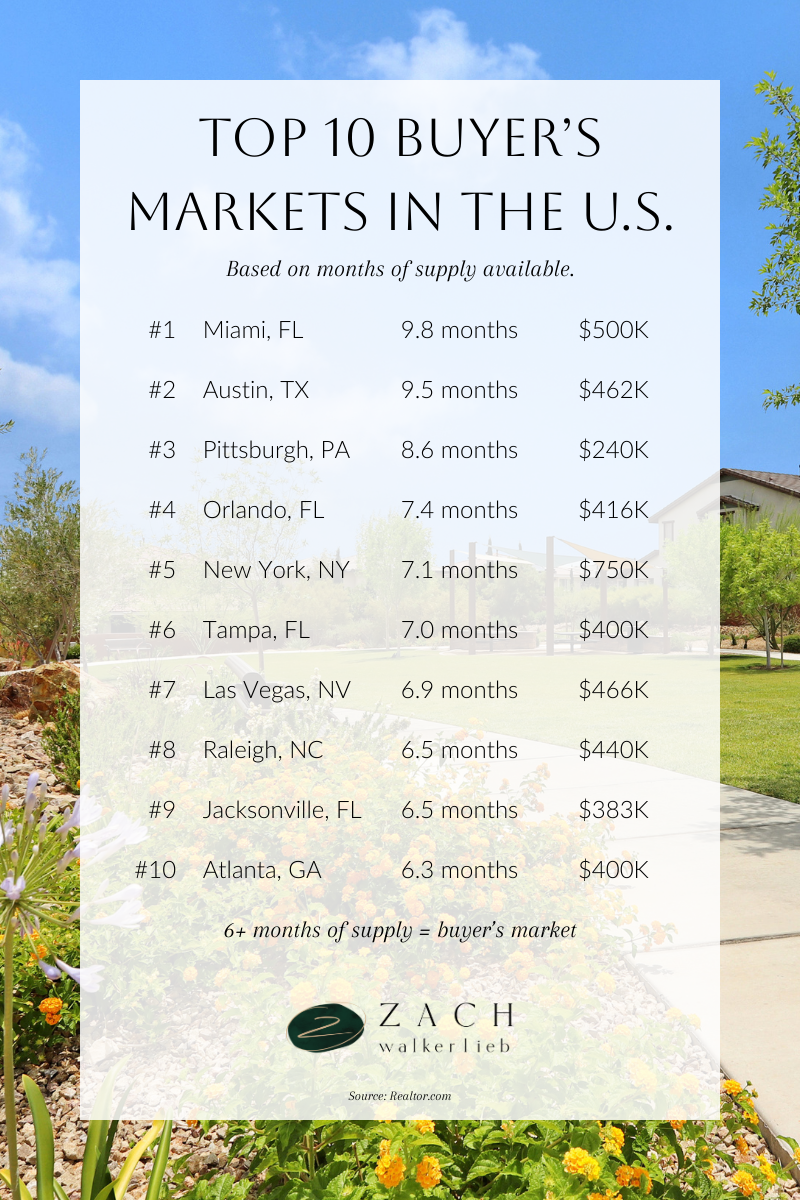
Realtor.com tracks months of supply across major U.S. metros to identify where buyers hold the most negotiating power. The benchmark is straightforward: when a market has more than six months of supply, buyers generally have more options, more time, and more leverage. Las Vegas came in at 6.9 months of supply, with a median list price of around $465,500, landing it at number seven on the national ranking.
For context, the metros at the top of the list include Miami at 9.8 months and Austin at 9.5. Las Vegas sits in serious company but tells a different story. Unlike some of the heavily overbuilt Sun Belt markets that are dealing with steep price corrections, Las Vegas has a more stable foundation. As of early 2026, single-family inventory sits at roughly 4 to 5 months of supply across the broader metro, while certain price ranges and ZIP codes have crossed the six-month threshold that puts them firmly in buyer's market territory.
The shift reflects years of inventory building back up after the pandemic-era frenzy. Active listings in the Las Vegas Valley are up roughly 25% year over year, and homes are sitting on the market for a median of 45 to 63 days, depending on price range. That's a far cry from the under-30-day sprint buyers faced in 2021 and 2022.
A Buyer's Market Is Not a Discount Market
One of the most important things to understand right now: more supply does not automatically mean lower prices. The median single-family home price in Las Vegas closed out 2025 at around $470,000, down just slightly from the all-time high of $488,995 set in November 2025. Prices are stabilizing, not collapsing.
What has changed is the dynamic around negotiations. Sellers who priced ambitiously and watched their listings sit are becoming more flexible. Price reductions are more common. Sellers are more willing to offer concessions like closing cost credits, rate buydowns, or repair allowances. The leverage has quietly shifted back to buyers without the market needing to crash to get there.
That's actually the healthy version of this story. Las Vegas is not dealing with the kind of structural overbuilding that plagued markets like Austin and Tampa. The city continues to draw in-migration from California and other high-cost states, with over 23% of Realtor.com listing views in Las Vegas originating from the Los Angeles metro alone. Demand is real. The market is recalibrating, not retreating.
How Smart Buyers Are Winning Right Now
The buyers who will look back on 2025 and 2026 as a smart window are the ones approaching the market with strategy rather than urgency. Here are the moves that matter:
• Target listings that have been sitting 30 to 90 days. These sellers have already adjusted their expectations. They're watching other homes sell and wondering why theirs hasn't. That mental shift creates real negotiating room.
• Ask for credits rather than just price cuts. A seller who won't budge on list price may still be willing to cover closing costs or buy down your interest rate. A rate buydown that drops your payment by even a quarter point can be worth more to you long-term than knocking $5,000 off the purchase price.
• Use the inspection as a tool, not just a formality. In the 2021 market, buyers were waiving inspections to win. Today you can conduct a thorough inspection and use the findings to negotiate repairs, credits, or price adjustments. That protection is worth having.
• Look for homes that would sell easily in any other market but are sitting now. Slower overall demand means well-maintained, well-located homes sometimes linger simply because fewer buyers are active. That's your opportunity.
The Las Vegas Market by Neighborhood: Not All Areas Are Equal

One of the most important things to understand about Las Vegas real estate is that the metro-level data masks real differences between submarkets. Summerlin and Henderson behave differently from each other and from North Las Vegas or downtown.
In Summerlin, inventory in the established and newer villages runs 4 to 6 months of supply, putting it in balanced-to-slight-buyer-advantage territory. Luxury inventory above $1 million can exceed 10 months of supply, giving well-capitalized buyers real leverage in premier communities like The Ridges and Red Rock Country Club.
Henderson, including communities like MacDonald Highlands and Green Valley, has seen similar trends with active listings up meaningfully year over year. Homes in the mid-tier price range are sitting longer, and sellers are more negotiable than they were 18 months ago.
Entry-level homes under $400,000 remain the tightest segment of the market. If you're shopping in that range, expect more competition. Move up in price and your options expand considerably.
One Important Caveat: This Window Could Close
Buyer's markets don't last forever, and this one is no exception. The consensus from housing economists is that if mortgage rates decline meaningfully in 2026, buyers who have been sitting on the sidelines will re-enter the market quickly. When that happens, inventory gets absorbed, competition returns, and the negotiating leverage buyers currently hold starts to erode.
Mortgage rates entering 2026 are hovering in the 6.5% to 7% range. A drop to 6% or below would meaningfully change affordability calculations for a large pool of buyers. Las Vegas, with its strong in-migration tailwinds and continued population growth toward a projected 3 million residents in Clark County by 2042, has fundamental demand waiting in the wings.
The conditions buyers are enjoying right now are real. They may also be temporary.
Thinking About Buying in Las Vegas? Let's Talk.
Understanding where the market sits nationally is one thing. Understanding how it translates to a specific neighborhood, price range, and your personal situation is another. Zach Walkerlieb has spent his career navigating every cycle this market has seen. If you're considering buying in Summerlin, Henderson, or anywhere in the Las Vegas Valley, reach out for a conversation about what this moment in the market means for your specific goals.
About the Author

Zach WalkerLieb is a top Las Vegas real estate agent and Managing Partner of Willow Manor, one of the city’s leading luxury real estate teams. With hundreds of millions in closed sales, Zach brings a deep, practical understanding of the Las Vegas housing market, from high-end luxury to everyday residential realities. Beyond real estate, he serves as Chairman of the Board for Habitat for Humanity and as a board member of Keystone Corporation, giving him firsthand insight into housing policy, affordability, and long-term community development. Known for clear thinking, market truth, and local expertise, Zach writes to help buyers, sellers, and investors make confident, well-informed decisions in Las Vegas real estate.