
Nevada’s Housing Crisis Has a Villain. It’s Not Who You Think.
Last week, I had the privilege of publishing an opinion piece in the Las Vegas Review-Journal on a topic I think about constantly as both a real estate professional and a lifelong Las Vegan: housing affordability. I want to share a little more about why I wrote it, and what I actually want people to take away from it.

The Conversation We’re Having Is Too Simple
Housing affordability is one of the most pressing challenges facing families in Las Vegas right now. Prices are elevated. Borrowing costs are still high. And when people look for someone to blame, single-family home investors have become a convenient target.
I understand why. The frustration is real. But I wrote this piece because I kept seeing the debate framed as binary. Investors are either villains or heroes, rentals are either good or bad. That kind of thinking is dangerous when it starts shaping public policy. The truth is more nuanced, and Las Vegas deserves a more nuanced conversation.
No single policy will be a silver bullet. And when we convince ourselves that one will, we risk missing the structural issues that are actually driving the problem.
What the Data Actually Shows
A recent analysis from UNLV’s Lied Center for Real Estate found that investors have represented roughly 1 in 5 home purchases in the Las Vegas area over the past 15 years. That number sounds significant until you look at what it actually tells us. The same study is careful not to assign blame. It simply identifies a trade-off: more investor participation means more single-family rental availability, but tighter supply for owner-occupants. That’s worth understanding, not weaponizing.
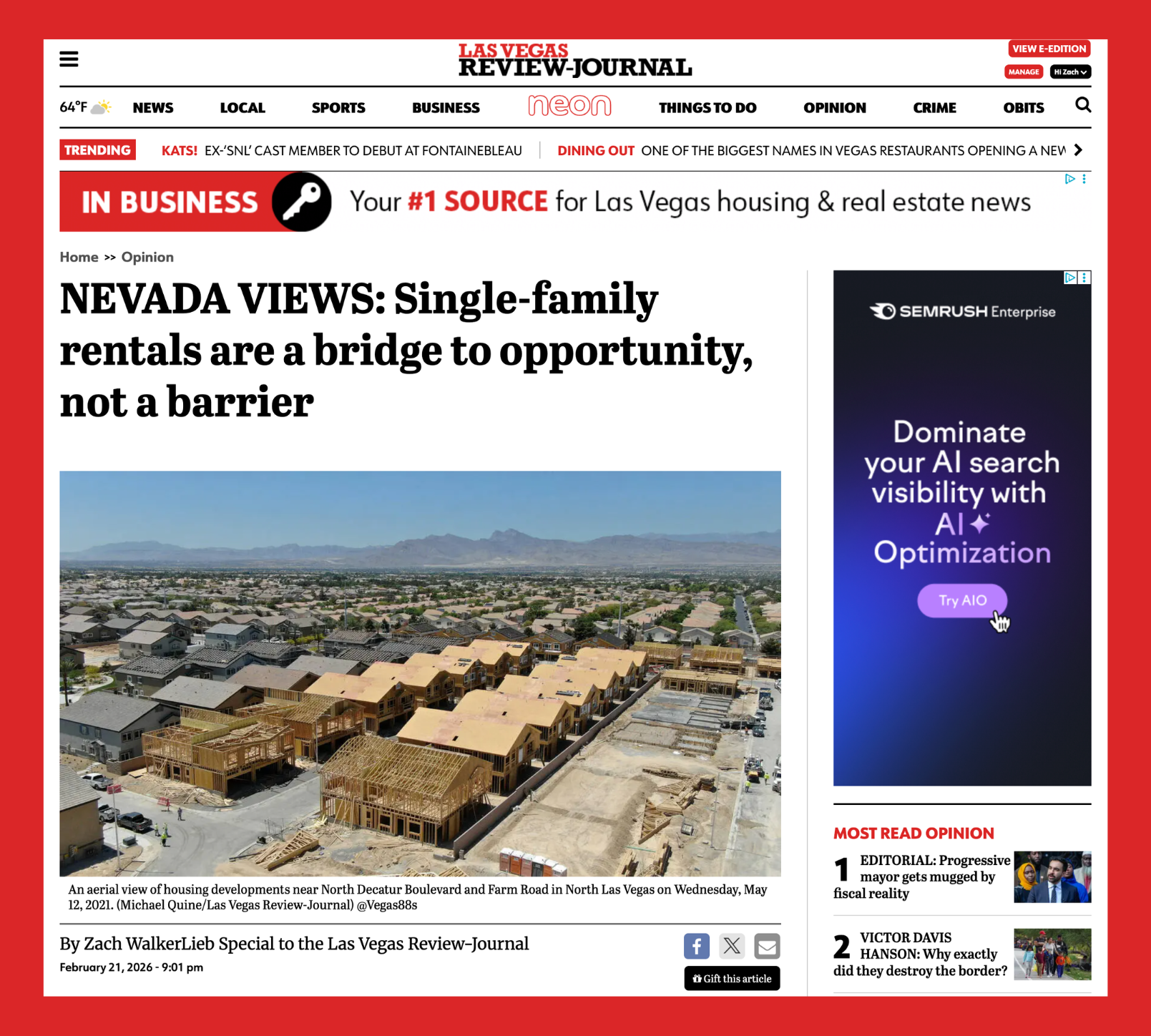
What the data is truly decisive about is something else entirely: supply. Southern Nevada has experienced nearly 15 years of chronic underbuilding. Since 2010, residential construction here has declined by more than 60 percent compared to historical norms, even as our population continued to grow. If construction had simply kept pace with prior trends, we’d have tens of thousands more homes in this valley today. That’s not a political opinion. That’s math.
The Real Issue: Nevada Doesn’t Control Its Own Land
Here’s what I most want people to understand, and what I think gets lost in the investor debate entirely. Roughly 80 percent of Nevada’s land is controlled by the federal government, with much of Southern Nevada under the jurisdiction of the Bureau of Land Management. This single fact shapes everything about housing development in our region. It limits where we can build, extends timelines, and drives up land costs before a single foundation is poured.
In my view, Nevada owning more of its own land is the single most important issue for both our economic future and our housing affordability. This isn’t a partisan position. It’s a practical one. If we can’t build where people need to live, no amount of investor regulation will make homes more affordable.
What This Means for Buyers, Renters, and Our Community
If you’re a renter in Las Vegas right now, single-family rentals may actually be providing stability while you navigate a market where buying is genuinely difficult. If you’re a prospective buyer, the path to ownership runs through increased supply: more homes being built, more land being made available, and fewer regulatory barriers slowing construction down.
The goal isn’t to pick a side between renters and owners, or between investors and first-time buyers. The goal is a Las Vegas where more people have access to more housing options. Rentals and ownership aren’t opposing forces. They’re both outcomes of the same system, shaped by policy choices we can actually influence if we’re focused on the right problems.
Why I Keep Talking About This

“Nevada owning more of its own land is the single most important issue for both our economic future and our housing affordability.”
I’m a fourth-generation Las Vegas local. My family has watched this city grow from a small desert town into one of the most dynamic places in the country. That history gives me perspective, and it gives me a stake in getting this right. I also serve as Chairman of the Board for Habitat for Humanity Las Vegas, so housing access isn’t just a professional concern for me. It’s personal.
My goal in writing for the Review-Journal wasn’t to defend investors or attack policy. It was to give this community real information so people can form real opinions, not just defend a team. Las Vegas deserves that.
If you have questions about the housing market, what these trends mean for your specific situation, or how to navigate buying or selling in today’s environment, I’d love to talk. Reach out here and let’s have an honest conversation.
Originally published in the Las Vegas Review-Journal, February 21, 2026.